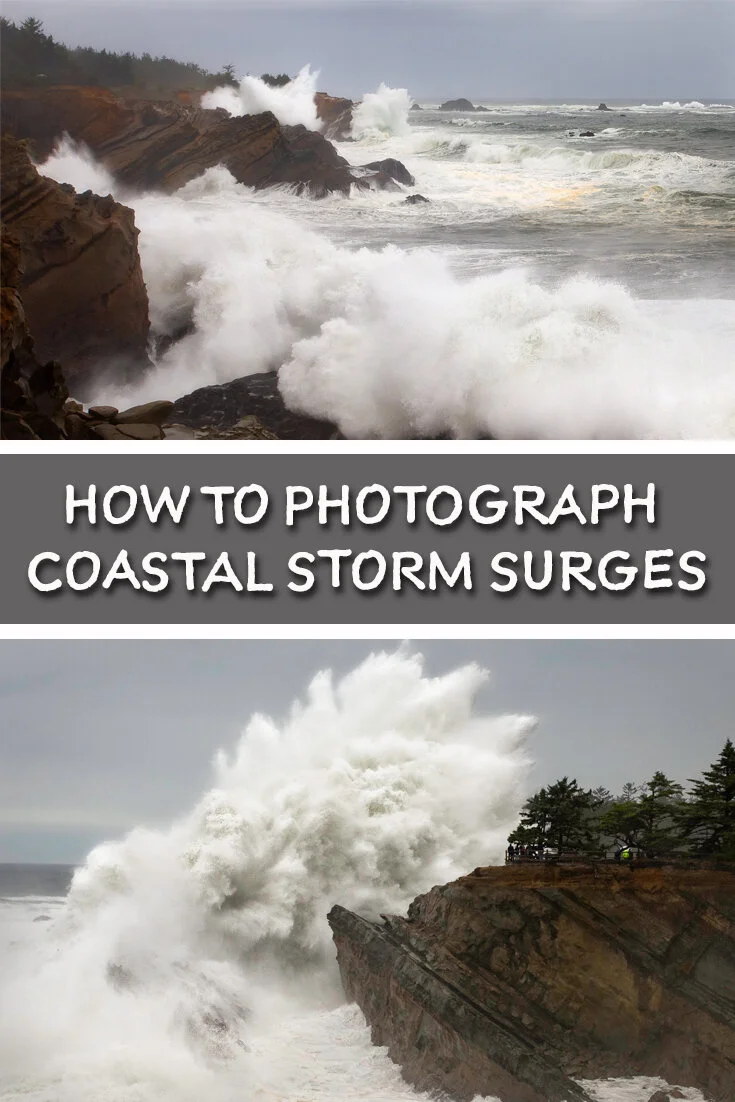
How to Photograph Coastal Storm Surges
One thing that the Pacific Northwest is relatively well-known for is the coastal winter storms. As a result, thousands of photographers flock to the coastal Pacific Northwest every year to witness and attempt to capture the explosive waves and colorful sunsets than can be found along the hundreds of miles of coastline.
*Disclaimer - This post features some affiliate links, which means I get a small commission if you make a purchase, at no extra cost to you. Thank you for your support!
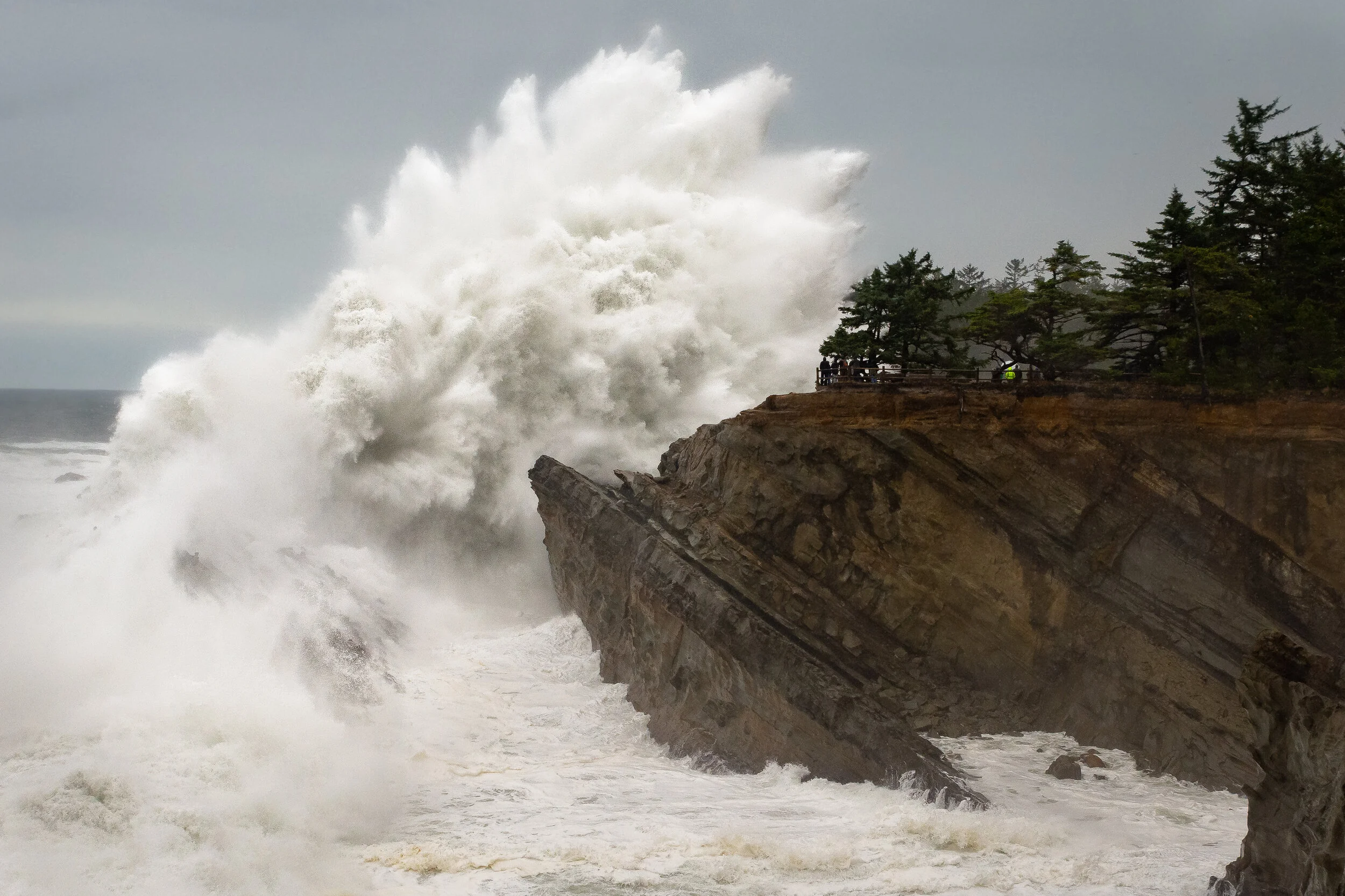
Explosive waves at Shore Acres State Park.
There are a few hazards that you must be aware of prior to visiting the coast:
Weather Conditions The varying weather conditions during a coastal storm can quickly effect the surf. Being aware of the most recent weather prediction for the area can inform you of interesting weather-related events, as well as keep you safe. I like to use a few applications, such as Weather Underground, Windy, and The Weather Channel.
Tide Conditions The tides, being on a lunar cycle, are ever-changing. Knowing what the tides will be doing, whether they are going out or coming in, as well as the swell size of the waves is a must. Not only will being aware of tidal influxes save you from being trapped in a cove, but are also a great predictor of what the wave action will be if you are in search of explosive waves on the cliffs. My favorite application to use is Magic Seaweed as it will tell you the tide predictions, surf height, and swell height for the week.
Never Turn Your Back to the Ocean The ocean is an inherently dangerous place in the Pacific Northwest. Rogue waves and sneaker waves have the tendency to come out of nowhere when you least expect it. These waves can also bring additional hazards with them, such as large logs and other debris.
Watch Your Step There are so many different types of coastal ecosystems that can be found along the coast in the Pacific Northwest. Much of the coast is made up of coastal bluffs and sandstone. These materials are known for eroding and giving way unexpectedly. It is recommended to follow any signage that states to stay away from the edge, as many of these bluffs can be hundreds of feet above sea level. Not only is this for your safety, but it is also to help reduce the rate of erosion.
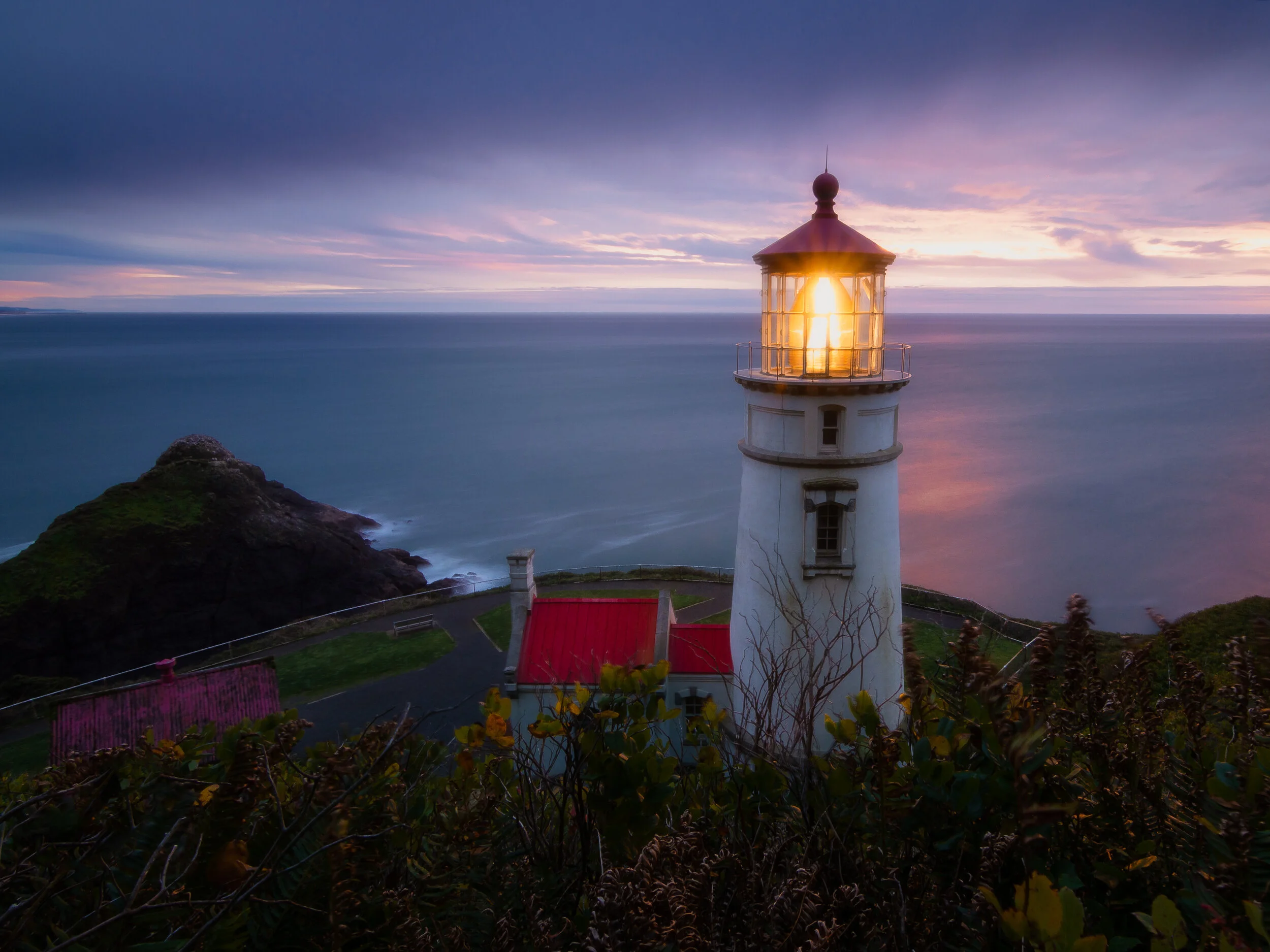
Pre-storm light shining upon the Heceta Head Lighthouse.
The difficulty about photographing coastal storm surges is having the ability to stay out in the elements for as long as possible to capture the inclement weather.
What to Wear
Rain Jacket A waterproof rain jacket is instrumental in staying out while getting sprayed by the waves.
Rain Pants A rain jacket is a given when it comes to inclement weather, but most do not consider rain pants as an essential piece of kit. Rain pants can keep the waves, spray, and rain from soaking your legs, as well as out of your boots (with some exceptions, obviously).
Waterproof Boots Cold toes can be your Achilles Heel when it comes to coastal photography. Make sure to keep the cold out with waterproof boots, such as rain boots, combining your hiking boots with a pair of neoprene socks, or hip or chest waders if you plan on stepping foot into the surf.
Hat or Beanie With photographing coastal storm surges comes the cold temperatures. Using a brimmed hat can keep the rain out of your eyes, or wearing a beanie combined with a hooded rain jacket will keep your head warm.
Gloves Your hands are the primary area of skin that is exposed to the elements when photographing coastal storm surges. Wearing a set of gloves that are dexterous to allow you to still control your camera while staying warm and toasty.
Etc
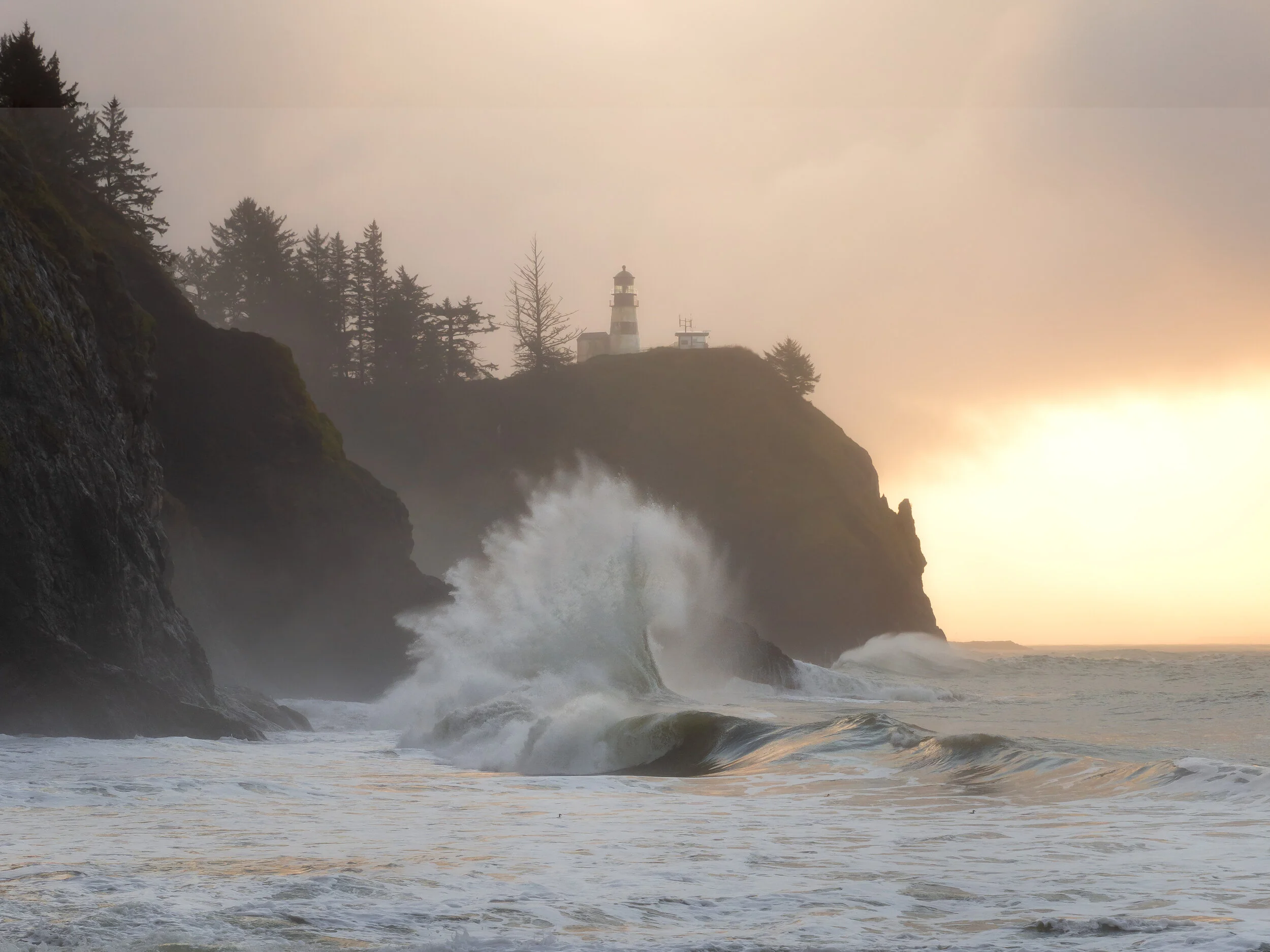
Waves crashing against the cliffs below the Cape Disappointment Lighthouse.
You don’t need all of the fanciest gear and equipment on the market in order to capture amazing images along the coast. But there are a few recommended pieces of gear that will either help or make your life easier while out on location.
Recommended Equipment
Camera Any camera will be able to capture varying degrees of the coast, but a camera that will be able to shoot in manual mode and accepts filters is recommended to create the best quality of image.
Sturdy Tripod Rain and wind are almost guaranteed to occur when shooting storm surges on the coast. A sturdy tripod is recommended to keep your camera steady. Most tripods have a hook on the center column which you can hang your backpack on, or other weighted bag, to minimize camera shake, as well as reducing the chance of your camera falling over after a strong gust of wind.
Remote Shutter Release Being able to reduce camera shake while timing the waves can be difficult. Using a remote shutter release allows you to reduce camera shake without having to use a 2 second timer and trying to time the waves as they come in. A wireless remote shutter release can also allow you to be upwards of 200 feet away from your camera and still being able to capture images. Just make sure that you get a remote shutter release that is compatible with your camera model.
Camera Cover Not all cameras are weather-sealed to handle the elements. To offset this, I highly recommend using a camera cover of some sort. You can use a cheap clear plastic cover such as this, or a higher end option that will also keep your hands out of the elements as well such as the ThinkTank Hydrophobia.
Circular Polarizer and/or ND Filters Depending on the weather and the image you are trying to capture, you may want to use a circular polarizer or ND filter. A circular polarizer will allow you to reduce the glare on water and increase the saturation of foliage. A ND filter will allow you to decrease your shutter speed and take longer exposures in order to capture more motion blur in the scene.
Lens Cloths Getting water on the front element of your lens is going to happen whenever you are photographing a seascape, more inherently so when out during a storm surge. A traditional lens cloth is helpful for light water spots, but have the tendency to smear heavy water droplets around rather than absorbing them. So I find it best to combine a lens cloth with an additional absorbent material, such as scientific wipes.
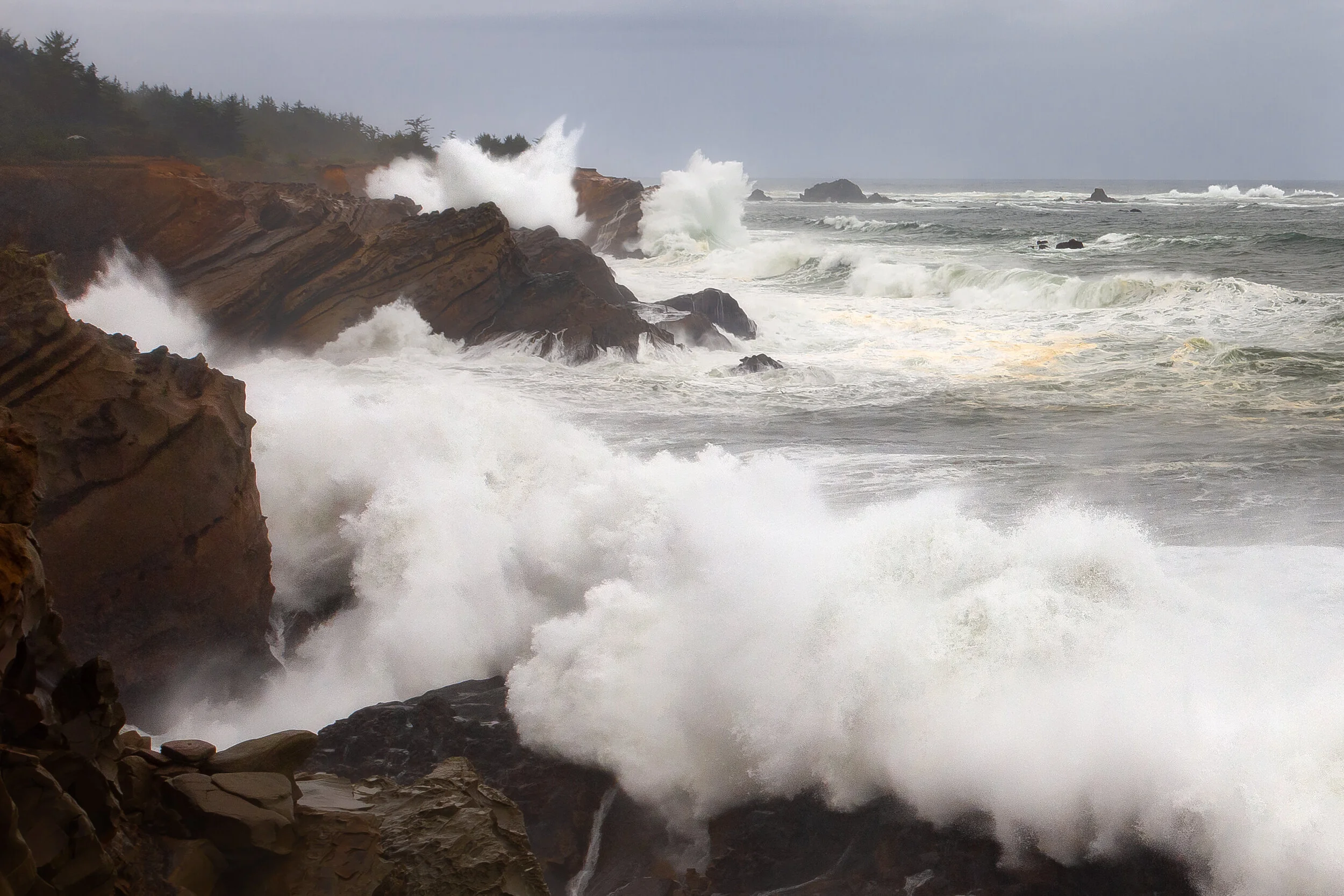
A series of high-energy waves crash against the Oregon coast.
Did I miss any tips, or is there a trick that you have found that increases your chance of capturing coastal storm surges? Please leave a comment to share!